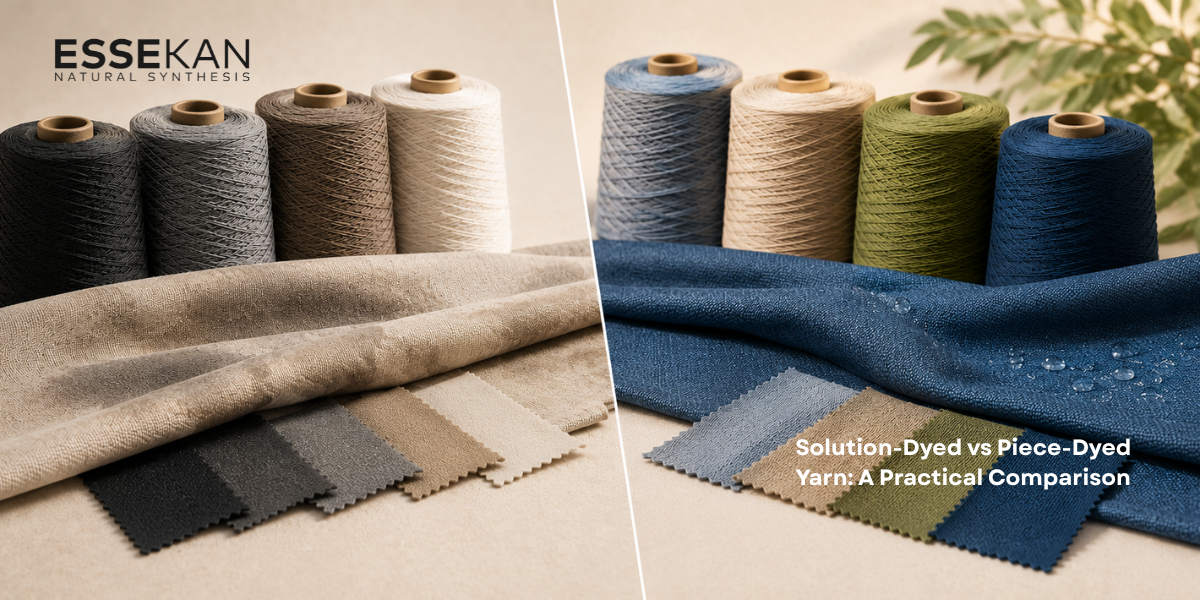
Solution-Dyed vs Piece-Dyed Yarn: A Practical Comparison
Ask a mill in Panipat which dyeing method is better, and you’ll get a different answer than if you ask an outdoor furniture buyer in Germany who’s had a container of faded cushion fabric returned from a resort in Dubai.
Both answers would be correct. That’s the point.
Solution dyeing and piece dyeing should not be viewed as competing technologies because they are designed for different applications. The problem is that most online comparisons praise solution-dyeing technology alone. This is often because many of those articles are written by people within the industry.
What Is Piece Dyeing?
Piece Dyeing is the most common form of dyeing practised for woven and knitted fabrics worldwide. In the piece dyeing process, fabric is first woven or knitted using undyed yarn and then dyed in its finished fabric form.
The most common piece-dyeing methods include:
Jet dyeing: The cloth rope is passed through a high-speed, pressurized dye bath, with dye fed by jet pumps. This process is popular for dyeing synthetics such as polyester.
Jigger dyeing: In this process, the cloth is passed open-width through a dye bath with rollers that apply dye evenly to the cloth. This process is popular for dyeing synthetic and cotton blends.
Winch Dyeing: The fabric cord is passed through a dye bath using a winch system, usually under atmospheric pressure. It is an alternative method that can be applied to delicate or light fabrics.
In all these processes, dye molecules penetrate the fibre from the outside and bond with reactive sites within the fibre. The degree of penetration varies with factors such as the nature of the fibre, the dyes used, the temperature, pressure, and time required, but dyeing is always carried out after fibre formation.
What Is Solution Dyeing?
In solution dyeing, also known as dope dyeing or mass coloration, the color is introduced into the polymer melt before the spinning process takes place. The pigment is introduced into the liquid polymer and passed through the spinneret for forming filaments. This leads to fibers that are colored throughout the entire cross-section, as opposed to only their surface.
For polypropylene yarns, solution dyeing is essential because the fibre lacks dye attachment sites at the molecular level. With other synthetic fibres such as polyester, nylon, and acrylic, solution dyeing is a matter of performance and sustainability.
The Five Performance Differences That Actually Matter
When buyers and specifiers compare these two methods, five performance dimensions consistently determine which is fit for purpose.
1. UV and Light Fastness
This is the biggest performance difference between the two methods. In piece-dyed cloth, the molecules of dye attach themselves to the surface of the fibre. Ultraviolet light directly attacks these surface bonds, gradually breaking them down and causing colour fading from the first day of sun exposure.
In the case of solution-dyed fabric, dyeing happens throughout the cross-section of the fibre. UV rays must degrade the entire fibre structure before significant colour fading occurs. As a result, solution-dyed fabrics retain their colour for years, whereas regular dyed fabrics can fade within a single outdoor season.
Test results show that piece-dyed synthetic textiles usually achieve level 4–5 on the ISO 105-B02 blue wool scale but can fall to grades 2–3 under 200 hours of accelerated UV radiation. In comparison, solution-dyed textiles typically achieve ratings of 6–7 under more than 1,000 hours of the same stress conditions.
This discrepancy can mean the difference between a fabric fading within six months and one lasting for several years.
2. Chlorine and Chemical Resistance
Dyes attached to fibre molecules can break down when exposed to oxidizing agents. For example, chlorine, which is used in swimming pools and laundry detergents, reacts with the molecular bonds and causes bleaching of colours, often unevenly, resulting in streaks or patchy discoloration.
Since solution-dyed pigments are embedded within the fibre rather than chemically attached to the surface, they do not undergo oxidative degradation. Solution-dyed materials used in poolside environments, marine settings, and industrial laundering operations retain their colour even under chlorine exposure, which can quickly fade comparable piece-dyed materials.
This difference is especially important for contract hospitality textiles, such as pool and bar areas at hotels, which need to withstand both sunlight exposure and frequent chlorine cleaning treatments. Early discoloration can result in significant replacement costs.
3. Wash Fastness and Colour Bleed
Wash fastness in piece-dyed materials varies significantly based on fibre material, dye type, and fixation methods. Piece-dyed synthetic materials such as polyester can achieve satisfactory wash fastness ratings (4–5 on the ISO grey scale) when properly processed. However, they still carry a higher risk of colour bleeding and shade variation compared to solution-dyed materials.
For weavers, this affects both finishing and post-finishing handling processes. Piece-dyed fabrics may transfer dye onto untreated or lighter-coloured fabrics. Solution dyeing eliminates this issue because the colour is embedded within the fibre itself.
Solution-dyed olefin yarns deliver more consistent and repeatable wash-fastness test results for contract textile purchasers demanding certification to standards such as AATCC 61, ISO 105-C06, and similar requirements.
4. Lot-to-Lot Colour Consistency
Piece dyeing can introduce colour variation at multiple stages, including dye solution composition, water quality, temperature control, fabric stretching during processing, and drying conditions. This is why mills conduct test dyeing and sample approvals. Achieving perfectly repeatable colours through piece dyeing requires precise control, and even then, shade variation between dye lots remains a normal industry occurrence. Buyers therefore allow a specific Delta E (DE*) tolerance for colour variation.
Solution-dyed yarns eliminate most of this variability. The colour originates from the masterbatch composition, which can be replicated precisely. Without a dyeing process, there are no variations caused by water chemistry, temperature fluctuations, or processing inconsistencies. Each production batch closely matches the previous one.
This is especially important for weavers producing textiles that require high colour consistency, such as contract furniture upholstery, hotel banquet seating, or marine interior fabrics, where panels may be cut from different fabric lots months apart but still need to match perfectly.
5. Environmental Footprint
Conventional piece dyeing is one of the most water- and chemical-intensive processes in textile manufacturing. A single production run requires substantial water for dye baths, pre-treatment, rinsing, and washing. The resulting effluent contains residual dyes, fixing agents, and auxiliary chemicals that require treatment before discharge.
Solution dyeing eliminates the dye bath entirely. Water consumption is reduced by approximately 80% compared to conventional dyeing processes. Chemical usage is also dramatically lower because there are no dye auxiliaries, fixatives, or dye-effluent treatment chemicals required. Energy consumption is reduced as there is no dye bath to heat or maintain.
For weavers serving export markets with sustainability requirements, European buyer codes of conduct, brand ESG mandates, or Higg Index reporting obligations, switching to solution-dyed yarn provides a documentable upstream improvement in environmental performance without requiring mill-level capital investment.
Essekan produces solution-dyed olefin yarns using a manufacturing process that reduces water and chemical consumption. This provides weavers with a measurable sustainability credential that can support export compliance and environmental reporting requirements.
Where Piece-Dyed Has the Advantage
Any fair comparison must acknowledge this clearly: piece dyeing has genuine advantages, and in many applications it remains the correct choice.
Colour range and production flexibility
Piece-dyed yarns offer an almost endless color choice range, and a high degree of accuracy in color matching for certain Pantone or proprietary colors in relatively low production volumes. Solution-dyed yarns rely on predetermined masterbatch formulations, although there have been great advances in this area recently. Nevertheless, a specific color can only be achieved in a solution-dyed yarn using large production orders and lengthy development time for approval of the masterbatch.
Lower minimum order quantities
It is easier for a weaver to dye only a small quantity of greige fabric up to a few hundred meters into a particular color without much commitment involved. For solution-dyed yarns, the usual quantity of raw materials that are required to produce a certain color may be quite large and reach even 2,000 kilograms, which may make it difficult for a small order to be fulfilled.
Lead times and reactive production
Piece dyeing supports a reactive production strategy in that a weaver needs to keep the greige fabrics and wait for confirmed orders before he or she begins the dyeing process. In the fashion and apparel industry, where colour trends change rapidly, this becomes an important consideration since stockpiling becomes difficult to predict.
Cost for indoor and short-lifecycle applications
When it comes to textiles not intended to withstand UV exposure, chlorine exposure, and harsh laundering, such as furniture upholstery, clothes, and other fashion items, the higher performance standards of solution-dyed yarn would not always be necessary, hence making the lower expense of piece-dyed textiles more sensible from a commercial point of view. There is little commercial value in paying for UV resistance that the application does not require.
Conclusion
Solution dyeing and piece dyeing are not competing technologies; they are designed for different textile applications. Piece dyeing remains the practical choice for indoor fabrics, fashion textiles, and smaller production runs where colour flexibility and faster turnaround matter most.
However, for outdoor, marine, hospitality, and contract textiles, solution-dyed yarn offers clear advantages in UV resistance, colour consistency, chlorine stability, and sustainability. As export markets continue demanding higher durability and lower environmental impact, solution-dyed yarn is becoming an increasingly important material choice for textile manufacturers across India and Southeast Asia.
For application-specific guidance on Taslan, Super Taslan, or FDY olefin yarn, submit an enquiry with your end-use and volume requirements, and we are happy to help you.
Frequently Asked Questions
What is the difference between solution-dyed and piece-dyed yarn?
Solution-dyed yarn is coloured before fibre extrusion by adding pigment directly into the polymer melt, while piece-dyed fabric is dyed after weaving or knitting. Solution dyeing offers better UV resistance, colour consistency, and durability for outdoor and performance textile applications.
Why does solution-dyed fabric resist fading better?
In solution-dyed fibers, pigment is embedded throughout the entire fiber structure instead of sitting only on the surface. This allows the fabric to maintain colour even after prolonged exposure to sunlight, chlorine, moisture, and harsh outdoor environmental conditions.
Is piece dyeing still useful in textile manufacturing?
Yes. Piece dyeing remains valuable for indoor textiles, fashion fabrics, smaller production runs, and applications requiring highly specific custom colours. It offers greater flexibility for shorter lead times and lower minimum order quantities compared to solution-dyed yarn systems.
Why is solution-dyed yarn preferred for outdoor textiles?
Outdoor fabrics require strong UV stability, weather resistance, and long-term colour retention. Solution-dyed yarn performs exceptionally well because the pigment is integrated during fibre production, reducing fading and maintaining fabric appearance for significantly longer periods outdoors.
Does solution dyeing reduce water consumption?
Yes. Solution dyeing eliminates traditional dye baths and significantly reduces water usage, wastewater generation, and chemical processing. Compared to conventional piece dyeing, solution dyeing can reduce water consumption by approximately 80 percent during textile coloration processes.
Which is better for marine fabrics: solution-dyed or piece-dyed?
Solution-dyed yarn is generally preferred for marine textiles because it offers superior resistance to UV exposure, saltwater, chlorine, moisture, and mildew growth. These properties help marine fabrics maintain performance and appearance in harsh environmental conditions.
Why do contract textile buyers prefer solution-dyed fabrics?
Contract textile buyers prioritize long-term durability, colour consistency, stain resistance, and lower maintenance requirements. Solution-dyed fabrics provide more reliable performance in hospitality, commercial seating, and public environments where fabrics experience heavy daily usage and cleaning.
Is solution-dyed yarn more sustainable than piece dyeing?
Solution dyeing is considered more environmentally efficient because it reduces water usage, wastewater discharge, and chemical consumption. It also supports longer product lifespan through improved fade resistance and durability, reducing replacement frequency over time.
Does piece-dyed fabric offer more colour flexibility?
Yes. Piece dyeing allows mills to produce a wider range of custom shades in smaller quantities with faster colour adjustments. Solution-dyed yarn usually requires larger production volumes and masterbatch development for exact custom colour matching.
Why are textile manufacturers in India and Southeast Asia shifting toward solution-dyed yarn?
Manufacturers supplying outdoor, marine, and contract textile markets are facing increasing demand for higher durability, sustainability, UV resistance, and export-quality performance standards. Solution-dyed yarn helps meet these requirements while improving long-term product reliability.