
Why Made-in-India Yarn with Italian Technology is the Supply Chain Advantage Brands Are Missing
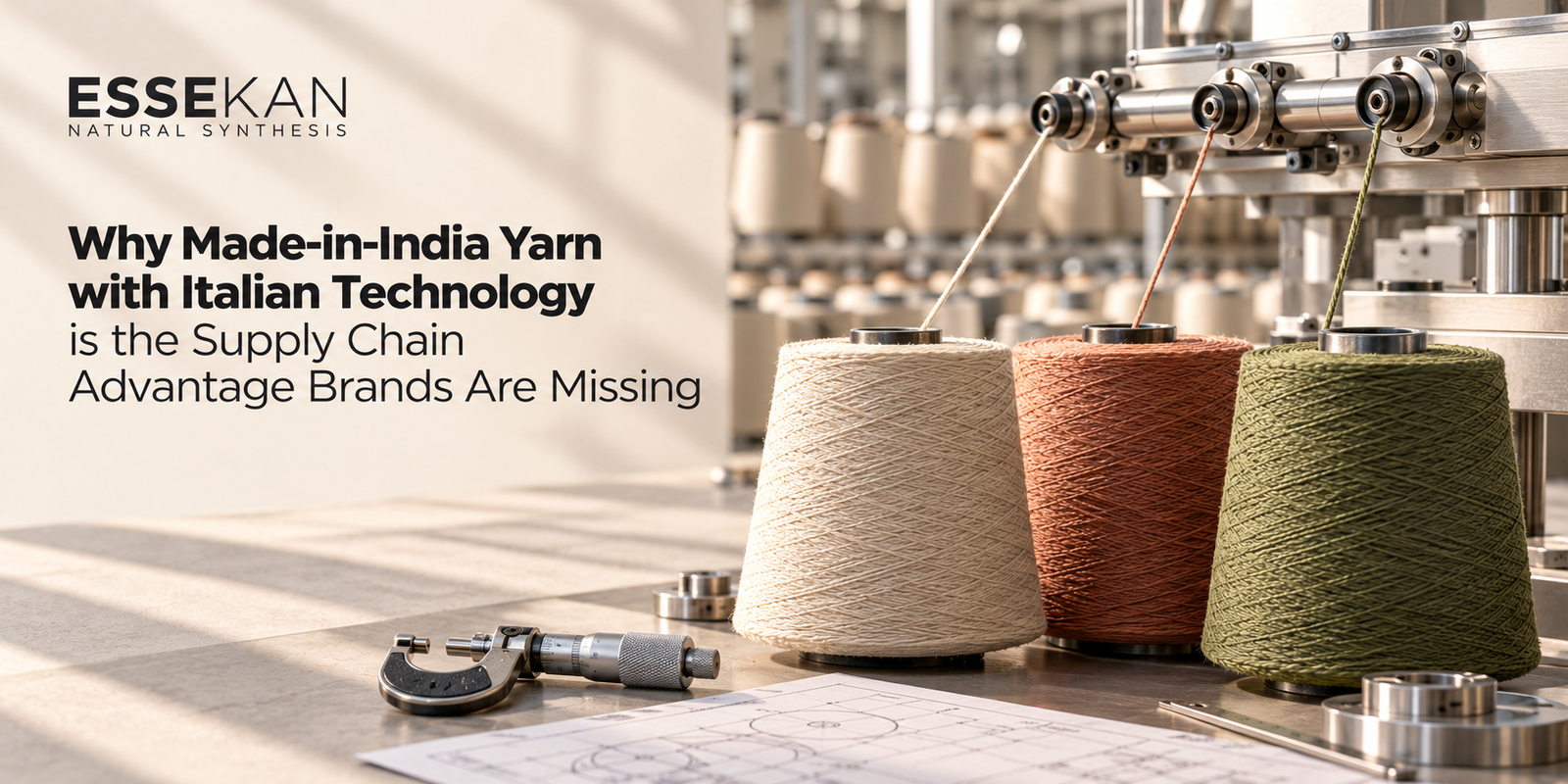
Global sourcing teams today are tasked with identifying suppliers that can meet requirements for consistency, lead times, compliance, and cost. One model gaining attention is an Indian yarn manufacturer Italian machinery approach, combining India’s manufacturing capabilities and competitive costs with advanced European production technology. It is a mix of Indian manufacturing capabilities with European machine lines. Given the way many brands still define premium yarn, this trend may go unnoticed. However, the numbers say otherwise, and more importantly, so do the mills’ capabilities.
Made in India's Precision Manufacturing Meets Global Sourcing Demands
While in the past the phrase “Italian technology” could be translated into machine lines purchased and used in Italy, today an increasing number of Indian mills rely on the same Italian extrusion and texturising lines as those that are used by European companies, operated by teams specially trained for these machine lines. This is the idea behind an Indian yarn manufacturer’s Italian machinery setup: same tolerances and same level of performance at Indian manufacturing cost and scale. This creates yarn that meets European specifications while leaving some room for negotiating prices and quantities.
As stated by the Ministry of Textiles, exports of man-made yarn, fabric, and made-up goods from India saw a 3.6% increase in FY 2025–26, reaching ₹42,687.8 crore, including solid performance in key markets such as Germany and Spain, which are the biggest yarn-importing countries in Europe.
Why Global Brands Are Sourcing Yarn from India
The commercial logic behind sourcing yarn from India quality and cost is straightforward once you look past outdated perceptions. Indian mills offer:
- Lower production and labour costs relative to Europe, without cutting into raw material quality
- Faster scaling for large or recurring EU orders
- OEKO-TEX and GRS-certified processes that meet the compliance bar international buyers already expect
- Shorter, more resilient logistics routes into Europe compared to several alternative sourcing hubs
Industry data from IBEF shows India ranks third globally in synthetic fibre production and second in cellulosic fibre and yarn production, with man-made fibre exports built on a fully self-sufficient domestic value chain from raw material to finished yarn. For sourcing managers, that means fewer intermediaries, fewer points of failure, and a supplier base that isn’t dependent on imported inputs to keep production running.
Put simply, sourcing yarn from India quality and cost advantages that compound rather than trade off against each other. A domestically integrated value chain keeps input costs predictable, while certification and process discipline keep quality consistent a combination that’s difficult to replicate in markets still reliant on imported raw materials.
India vs China: The Supply Chain Shift Brands Can't Ignore in 2026
No conversation about yarn sourcing is complete without addressing India vs China yarn supply chain 2026 realities directly. China still leads on raw scale, but brands are actively diversifying away from single-country dependence a trend accelerated by tariff volatility, longer shipping times, and rising compliance scrutiny on origin and sustainability claims. India offers a credible second base of government-backed export incentives, expanding capacity, and mills already running Italian-grade equipment. For EU buyers specifically, that means an alternative source that doesn’t force a trade-off between cost and quality control.
What Sets Indian Yarn Suppliers Apart
Not every supplier claiming “premium” yarn can back it up with process control. The real India yarn supplier competitive advantage shows up in three places: raw material traceability, machine-level consistency, and certification. Mills built around solution-dyeing and precision-drawn filament, like Essekan’s FDY yarn, reduce colour variation and structural inconsistency batch to batch, which matters enormously to brands manufacturing at volume. Add OEKO-TEX Class 1 and GRS certification, and Indian suppliers stop competing only on price; they start competing on reliability, which is what actually keeps a brand’s production line running on schedule.
Made-in-India Olefin Yarn is Built for EU Compliance and Performance
Olefin yarn deserves particular attention here. Made in India olefin yarn for EU brands is gaining traction specifically because olefin is inherently recyclable, requires no water-soluble dyes and uses significantly less water to produce than conventional fibres. All points align directly with the EU’s tightening sustainability and traceability requirements for textile imports. Essekan’s Taslan yarn range applies this same solution-dyed, low-impact process to air-textured filament, giving upholstery, outdoor, and technical textile brands a fibre that’s engineered for UV stability and abrasion resistance without compromising on environmental credentials.
For procurement teams in Germany, Spain, and other EU markets, Made in India olefin yarn for EU brands can provide an opportunity to consolidate supply while maintaining access to product specifications, certification documentation, and consistent manufacturing. The suitability of the yarn should ultimately be assessed against the brand’s technical, compliance, and performance requirements.
Italian Technology, Made in India
This is precisely the model Essekan is built on. As a certified olefin yarn manufacturer producing Taslan, Super Taslan, and FDY yarns, Essekan runs on patented Italian technology while manufacturing entirely in India, combining precision engineering with globally competitive pricing. It’s a direct example of made in India yarn Italian technology working the way brands actually need it to: consistent, certified, and cost-effective at scale. For an Indian yarn manufacturer Italian machinery relationship to work long-term, brands need a partner who treats quality control as a process, not a promise, and that’s the standard Essekan builds every batch against.
What to Check Before You Switch Suppliers
Before shifting volume to a new mill, most sourcing teams run through the same checklist: certifications, sample consistency, minimum order quantities, and lead time reliability. When evaluating an Italian machinery partner, ask to see the machine lines directly and request batch-to-batch samples. Avoid a single showcase sample, and confirm certifications are current rather than historical. A supplier confident in its process will welcome this scrutiny rather than deflect it.
It’s also worth mapping the practical side of India vs China yarn supply chain 2026 planning: shipping lanes, port congestion history, and how each country’s export incentive structure affects landed cost. These factors often matter more to total cost of ownership than the quoted yarn price alone, and they’re exactly where an established India yarn supplier competitive advantage tends to show up over time: fewer disruptions, not just a lower invoice.
Brands re-evaluating their supplier base in light of changing India vs China yarn supply chain 2026 dynamics do not necessarily have to choose between quality and cost. Combining India’s manufacturing capabilities with advanced international technology can provide a practical sourcing alternative for brands looking to diversify their supply chains.
When the priority is sourcing yarn from India for quality and cost, reliable manufacturing, or Made in India olefin yarn for EU brands, Essekan’s FDY, Taslan, and Super Taslan ranges are designed for applications across upholstery, outdoor textiles, floor coverings, and technical textiles.
Get in touch with Essekan to request samples or discuss a supply program.
Keep Reading
Taslan vs FDY vs Super Taslan: Which Olefin Yarn is Right for Your Application?