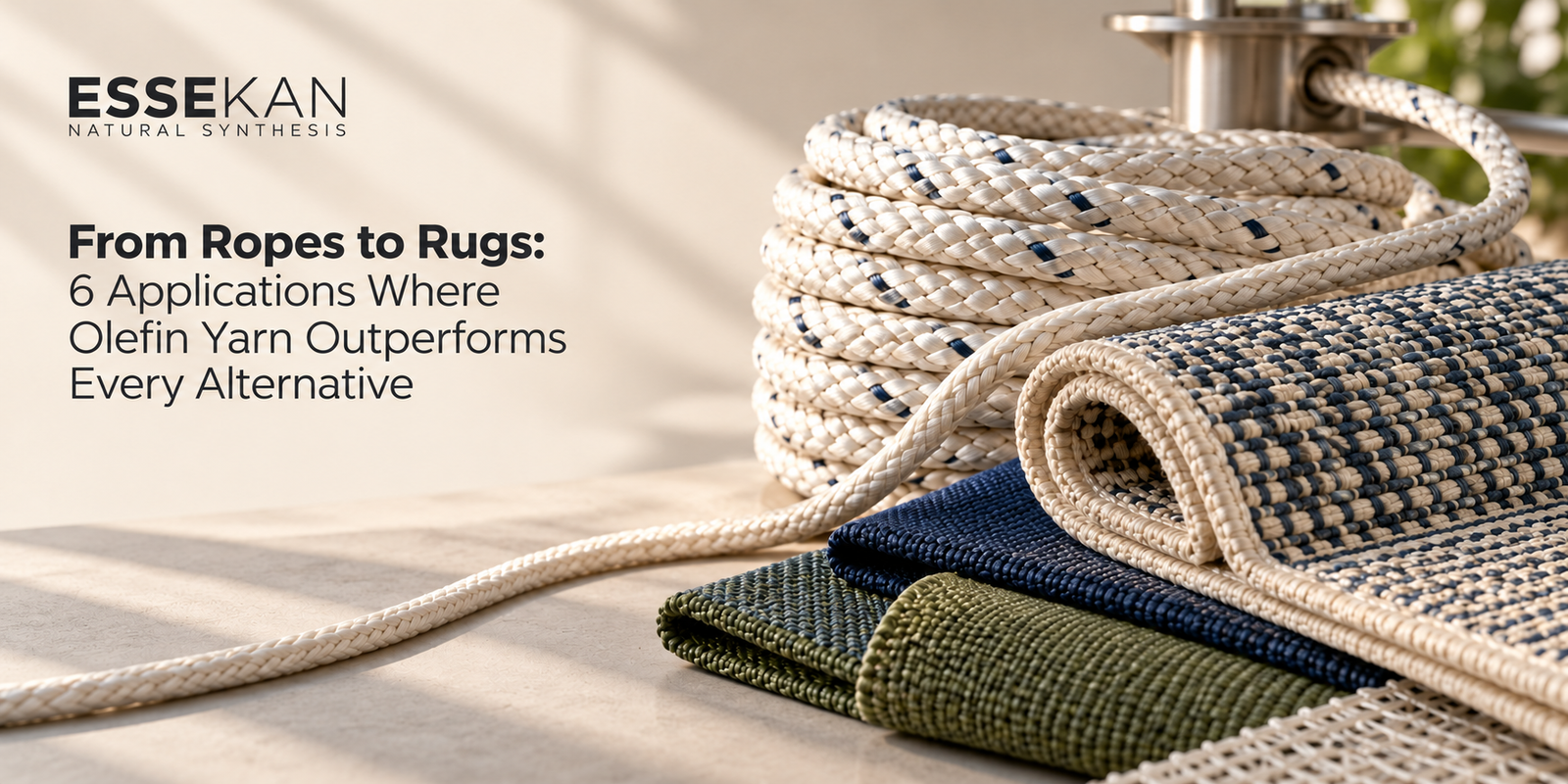
From Ropes to Rugs: 6 Applications Where Olefin Yarn Outperforms Every Alternative
Olefin yarn, particularly polypropylene yarn, is widely used in textile production because of its lightweight nature, low moisture absorption, chemical resistance, and durability. The best applications for polypropylene yarn have expanded across marine, flooring, upholstery, geotextile, packaging, and other technical textile applications where these properties provide practical performance and cost advantages.
However, understanding where polypropylene performs best helps explain why manufacturers in marine, furniture, construction, packaging, and technical textile industries continue to use it. Its combination of low weight, moisture resistance, chemical resistance, and cost efficiency can make it a practical alternative to other fibres in specific applications.
In this article, we’ll explore six practical olefin yarn applications where polypropylene’s combination of lightweight construction, moisture resistance, chemical resistance, and cost efficiency can offer clear advantages over alternative fibres.
Why Olefin Yarn Works in the Right Applications
Before looking at specific polypropylene yarn uses in textiles, it would be useful to consider its unique features. The olefin fibre is made from at least 85% ethylene, propylene, or other olefin units, and it is almost non-absorbent – in the soak test, it absorbs no more than 0.5% of its own weight of water. In contrast to natural fibres, which absorb several times their own weight of moisture, olefin fibre differs a lot in behaviour when used practically.
This one property, which is a lack of moisture absorption, is what makes the rest happen. Combine it with a density lower than almost any other common textile fibre, and you get a fabric that is both durable and light, without needing additional chemical treatment to achieve durability. It also offers good resistance to moisture and many chemicals, making it suitable for a wide range of industrial and technical textile applications.
Here are the uses of polypropylene yarn in textile labelling, including olefin. They are officially defined according to the Textile Fibre Rule from the Federal Trade Commission.
1. Marine Rope and Rigging: Marine Rope Polypropylene Yarn
Marine rope polypropylene yarn is widely used in applications where buoyancy is an important requirement. Polypropylene’s low density allows rope made from the fibre to float, making it useful for floating lines, utility ropes, fishing-related applications, and other marine uses. Its low moisture absorption also means the fibre does not readily take up water, helping the rope remain relatively lightweight when wet.
Add in its resistance to moisture and many chemicals encountered in marine environments, UV exposure, and chemical exposure from fuel, oil, or cleaning agents, and it’s easy to see why olefin dominates mooring lines, towlines, anchor lines, and fishing nets. It is also comparatively low-cost against nylon or polyester rope of similar diameter, which matters when you’re replacing a working line regularly rather than treating it as a one-time purchase.
2. Olefin Yarn Outdoor Carpet and Rugs
Olefin yarn outdoor carpet and rugs are well suited to patios, balconies, poolside areas, resorts, and other spaces where textiles may be exposed to moisture. Polypropylene’s low moisture absorption helps limit water retention within the fibre, which can support easier drying and reduce moisture-related problems. The finished product’s construction, ventilation, maintenance, and environment also influence mildew performance.
Solution-dyed polypropylene can also provide good colour retention for outdoor textiles. In this process, colour is incorporated into the polymer before the fibre is formed rather than being applied only to the finished textile. For outdoor products exposed to sunlight, selecting an appropriately UV-stabilized yarn is also important for maintaining long-term colour and fibre performance.
3. Olefin Yarn for Upholstery and Outdoor Fabric
Olefin yarn for upholstery and outdoor fabric is used in selected residential, hospitality, commercial, and outdoor applications where moisture resistance, stain resistance, abrasion resistance, and colour retention are important. These properties can make polypropylene a practical option for furniture and fabrics that experience regular use and require a balance of appearance, durability, maintenance, and cost.
For large-scale upholstery projects, polypropylene can also offer material and production cost advantages. Hotels, offices, and other commercial environments can benefit from a consistent yarn specification across large quantities of fabric, provided the selected yarn and finished construction meet the required durability and appearance standards.
4. Indoor Carpets and Carpet Backing
Beyond outdoor products, the best applications for polypropylene yarn also include selected indoor carpet face yarns and carpet backing. Its low moisture absorption, resistance to many chemicals, and relatively low cost can make it suitable for flooring products where these properties are important. However, nylon may be preferred for some demanding commercial carpet applications where higher abrasion resistance and resilience are required.
This combination of performance and cost is exactly why olefin has become a standard specification in commercial carpet tile manufacturing, even in facilities that never see the outdoor conditions its moisture resistance was originally prized for.
5. Geotextiles and Industrial Fabrics
In construction and civil infrastructure, olefin yarn applications include geotextile products used for separation, filtration, drainage, erosion control, and reinforcement. These fabrics get buried underground for years, sometimes decades, and need to resist chemical breakdown from soil compounds, groundwater, and constant moisture exposure without losing tensile strength, the same properties governed by AASHTO M288 geotextile specifications- exactly the conditions olefin is built for.
Its resistance to acids and alkalis found in soil, combined with its low cost relative to the volume required for large civil projects, makes it the practical default fibre for this category rather than a premium alternative.
6. Packaging, Bags, and Technical Textiles
Among the important polypropylene yarns used in textiles are woven sacks, bulk bags, and other industrial packaging products used in agriculture, construction, and shipping. Polypropylene’s low density, useful strength, moisture resistance, and chemical resistance make it suitable for packaging products that need to remain lightweight while protecting contents during handling, transport, and storage.
Polypropylene is also used in selected nonwoven and technical textile applications, including automotive components and filtration-related products. Its thermoplastic properties allow it to be thermally bonded in suitable manufacturing processes, which can help create stable fabric structures without relying on additional adhesives in some constructions.
Best Applications for Polypropylene Yarn: The Common Thread
- Moisture resistance: critical for marine yarn, outdoor, and geotextile use, where competing fibres absorb water and degrade.
- Lightweight strength: Polypropylene is one of the lightest commonly used textile fibres, helping manufacturers create lightweight products with useful strength and durability.
- Chemical and UV resistance: It holds up under sun, salt, soil chemicals, and cleaning agents where other fibres discolour or break down.
That combination is why polypropylene yarn used in textiles keeps expanding into new categories every year, from automotive interiors to advanced filtration fabrics, rather than staying limited to the rope-and-carpet reputation it built decades ago.
Final Thoughts
Performance across different olefin yarn applications depends not only on the fibre but also on yarn quality and manufacturing consistency. Factors such as consistent denier, appropriate drawing, yarn uniformity, tenacity, and suitable UV stabilisation can influence the performance of the finished textile, particularly in products designed for prolonged outdoor exposure.
If you’re specifying olefin yarn for outdoor carpet and rugs or technical textile manufacturing, take a look at our FDY Olefin Yarn range for specifications suited to industrial and commercial applications.
For olefin yarn for upholstery and outdoor fabric, selecting the appropriate denier, tenacity, colour, and UV stabilisation can help ensure the yarn matches the requirements of the finished product.
Have a project that needs the right olefin yarn spec? Get in touch with our team to discuss denier, tenacity, and UV-stabilization options for your application.
Related Articles / Also Read
Best Yarns for Outdoor Furniture Fabric in 2026: UV Resistance, Durability & Performance Compared