
Upholstery Yarn That Passes 40,000 Martindale Cycles: What Fabric Brands Need to Know
The upholstery industry has evolved from focusing mainly on aesthetics, colour, and price to prioritising durability, comfort, and long-term performance. The Martindale abrasion test is a key measure of upholstery fabric durability, especially for hotels, offices, restaurants, public spaces, and residential furniture.
While fabric construction plays an important role, fibre type, yarn strength, twist, and construction also influence abrasion resistance. Choosing the right upholstery yarn is therefore essential for achieving lasting fabric performance.
Essekan manufactures high-performance polypropylene (olefin) yarns for demanding upholstery applications. Our FDY, Taslan, and Super Taslan yarns are tested to exceed 40,000 Martindale cycles under ISO 12947, offering the durability required for commercial and residential furniture. This guide explores Martindale testing, the role of yarn selection, and how to choose the right upholstery yarn for long-lasting performance.
What Is the Martindale Abrasion Test?
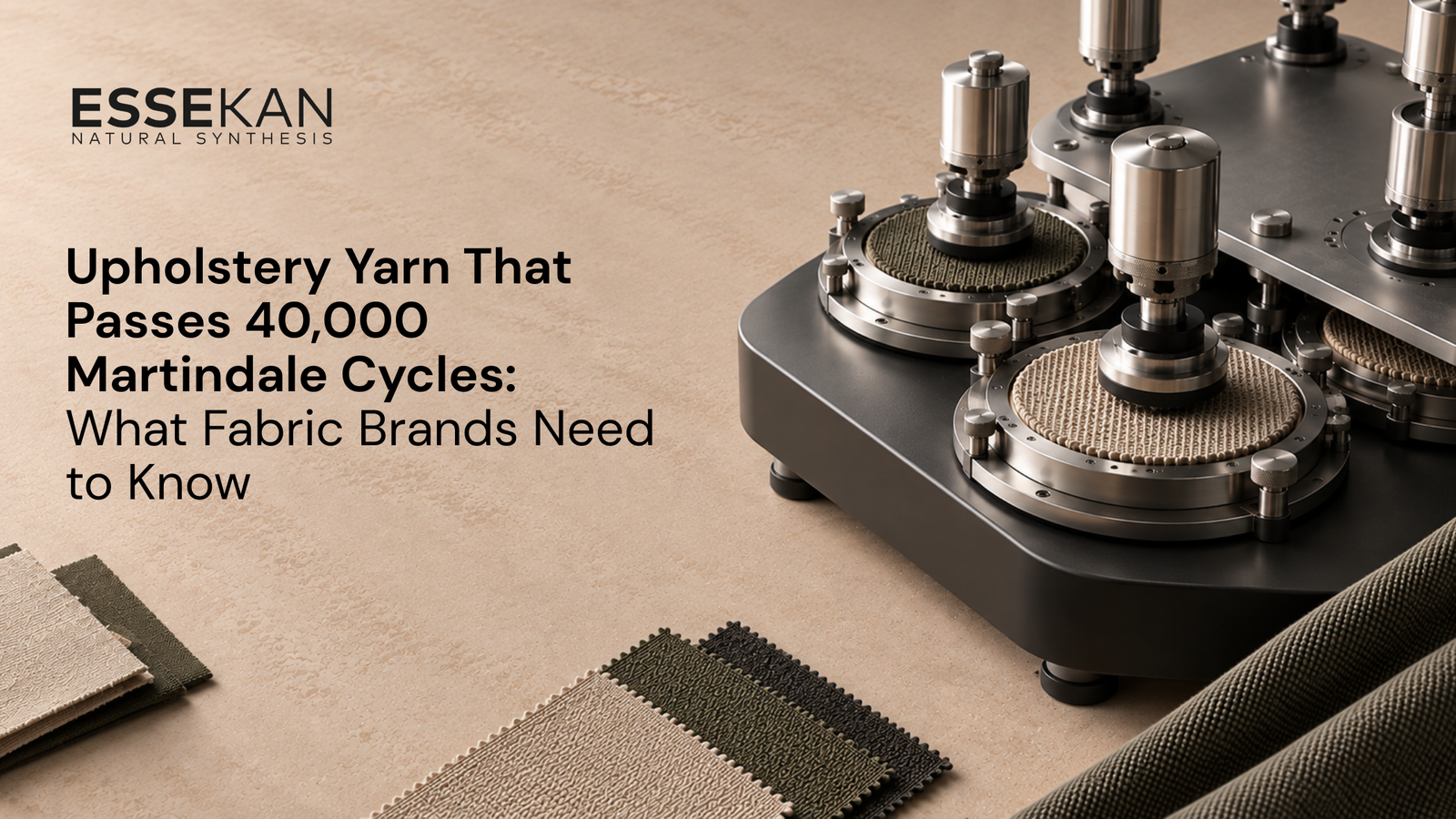
The Martindale abrasion test is a widely recognised method for measuring fabric resistance to wear during regular use. Under ISO 12947, a fabric sample is repeatedly rubbed against a standard abrasive material in a figure-eight motion until visible wear or structural damage occurs.
The number of rubs completed before damage is recorded as the Martindale cycle count. Generally, a higher count indicates greater abrasion resistance. Fabrics below 10,000 cycles are typically suited to decorative use, 20,000 – 40,000 cycles for residential upholstery, and over 40,000 cycles for commercial applications. Heavy-duty environments may require ratings above 70,000 cycles.
Yarn quality also plays an important role, as fibre type, yarn construction, weaving, and finishing can all influence the final fabric’s abrasion performance.
How Upholstery Yarn Impacts Martindale Cycles
The abrasion resistance of upholstery fabrics engineered for lasting comfort and durability depends heavily on yarn properties. Even if the two types of fabric have the same structure, differences in yarn quality can produce very different Martindale results.
Several yarn characteristics directly influence abrasion resistance:
Fibre Type
Different fibres respond differently to abrasion. For instance, man-made fibres like polyester, nylon, and olefin have greater abrasion resistance than most natural fibres. Nevertheless, natural and synthetic fibres are often blended for better appearance, feel, and texture of the fabrics.
Polyester is popular because it balances durability, affordability, and dyeing flexibility. Nylon has a very high resistance to abrasion and tensile strength. Olefin is resistant to moisture and performs excellently under tough conditions.
Yarn Twist
Twist in yarns affects compactness and stability. A well-twisted yarn will hold fibres together more effectively during friction. If the twist is too little, then the fibres may separate more easily while being subjected to abrasion. On the other hand, if the twist is excessive, then the fabric will become rigid and uncomfortable to wear.
Yarn Evenness
Consistent yarn quality improves overall fabric performance. Poor quality yarns have low quality, resulting in weak areas within the fabric structure. This is evident during abrasion tests. Good quality spinning, supported by controlled manufacturing processes, will enhance the uniformity of the yarn.
Tensile Strength
Strong yarns are more resistant to fiber breakage due to friction. This is especially important for high abrasion resistance yarn upholstery, where fabrics need to endure heavy use over many years in commercial settings.
Yarn Hairiness
Hairy yarns tend to pill faster under rubbing conditions. Yarn hairiness can be minimized to improve appearance retention and overall fabric behavior.
What Is Considered a Good Martindale Rating?
There is no single Martindale rating for every upholstery application. The required performance depends on how frequently and where the furniture is used.
Generally, fabrics below 10,000 cycles suit decorative applications, 20,000 – 40,000 cycles are common for residential upholstery, and over 40,000 cycles are recommended for commercial use. Heavy-duty, high-traffic environments typically require ratings above 70,000 cycles.
Achieving these performance levels also depends on fibre selection, yarn construction, and yarn quality. Essekan’s polypropylene (olefin) FDY, Taslan, and Super Taslan yarns are tested to exceed 40,000 Martindale cycles under ISO 12947, supporting demanding commercial upholstery applications.
Common Yarn Types Used in High-Performance Upholstery
Olefin (polypropylene) is a reliable choice for high-performance upholstery, offering excellent abrasion resistance, low moisture absorption, stain resistance, and durability. Essekan’s FDY, Taslan, and Super Taslan yarns are tested to exceed 40,000 Martindale cycles under ISO 12947, making them suitable for demanding commercial, hospitality, outdoor, and residential upholstery applications.
High Abrasion Resistance
Polypropylene (olefin) offers excellent abrasion resistance, low moisture absorption, stain resistance, and long-term durability. Essekan’s FDY, Taslan, and Super Taslan yarns are tested to exceed 40,000 Martindale cycles under ISO 12947, making them suitable for demanding commercial, hospitality, outdoor, and residential upholstery.
Engineered Yarn Construction
Yarn construction also influences upholstery performance. Factors such as tensile strength, evenness, twist, and spinning quality help improve abrasion resistance and maintain fabric appearance over time.
Sustainable Performance
GRS-certified recycled polypropylene yarn combines verified recycled content with the durability and performance required for modern upholstery applications.
Certified Quality
Essekan follows stringent quality controls and recognised certification standards to ensure consistent quality, traceability, and reliable performance for global upholstery manufacturers.
Why Brands Should Not Focus Only on the Highest Martindale Number
A higher Martindale rating does not always mean better upholstery performance. While abrasion resistance is important, factors such as softness, flexibility, weight, breathability, cost, and intended use also matter.
Luxury residential upholstery may prioritise comfort and aesthetics, while hospitality and healthcare applications may require greater durability, stain resistance, and easy maintenance. Outdoor fabrics may need water and UV resistance.
The goal is to create a balanced fabric that delivers the right performance for its intended application, not simply the highest Martindale rating.
How Essekan Manufactures High-Performance Upholstery Yarn
At Essekan, we manufacture high-performance polypropylene (olefin) yarns for demanding upholstery applications. Our FDY, Taslan, and Super Taslan yarns are selected based on durability, performance, and end-use requirements.
With technical consultation, product sampling, stringent quality control, and advanced manufacturing capabilities, we support commercial, residential, hospitality, healthcare, and outdoor upholstery manufacturers. Our yarns are tested to exceed 40,000 Martindale cycles under ISO 12947, delivering consistent quality, reliable supply, and dependable performance.
Final Thoughts
Commercial upholstery durability is a key consideration in modern textile sourcing, with the Martindale test widely used to assess fabric abrasion resistance. However, lasting performance begins at the yarn level.
Fibre type, yarn construction, tensile strength, spinning quality, and finish compatibility all influence fabric durability. Understanding the link between yarn selection and Martindale performance helps manufacturers make more informed sourcing decisions.
Whether for hospitality, healthcare, commercial interiors, or residential upholstery, selecting the right yarn system is essential for developing durable, reliable, and commercially successful fabrics.